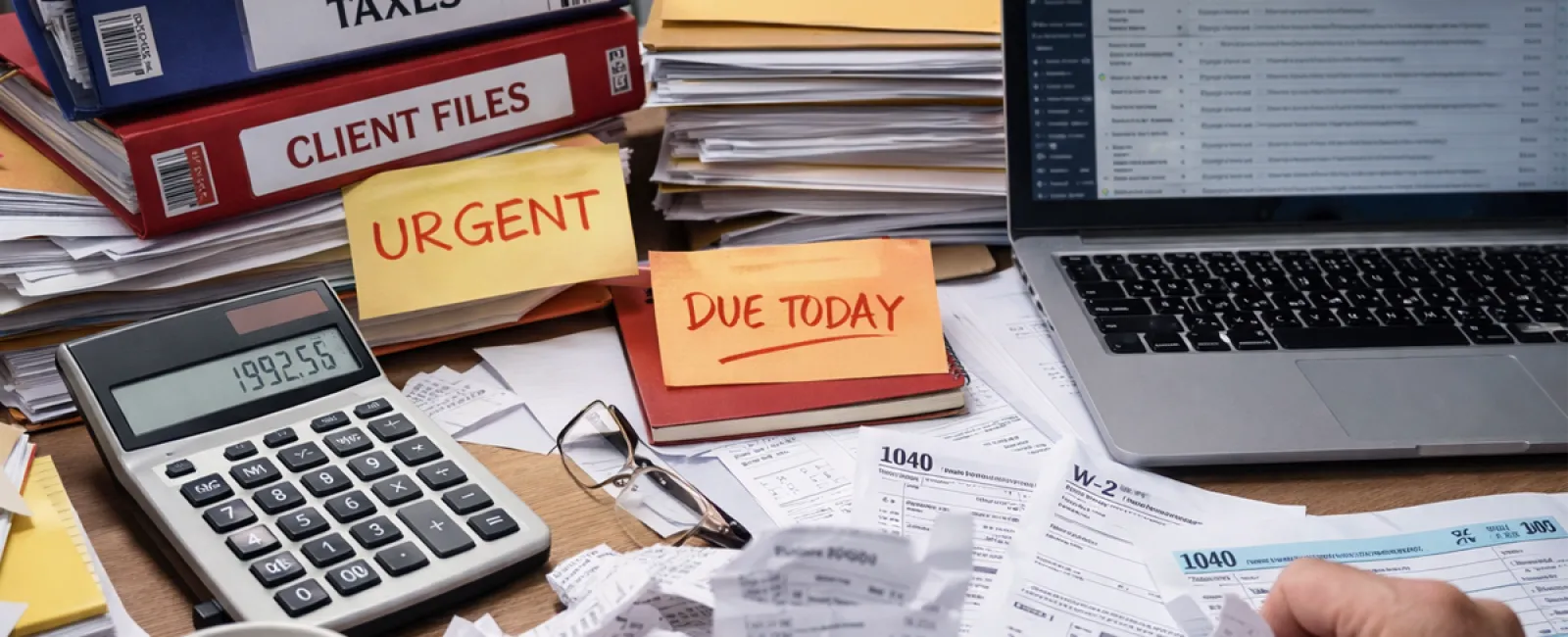
It's the height of tax season in March.
Your accounting team is overwhelmed, your bookkeeper is rushing to keep up, deadlines are pressing, and your inbox is flooded with urgent emails.
Everyone is laser-focused just to survive the month.
This scenario isn't surprising to you.
But it's no secret to cybercriminals either.
Studies reveal a sharp rise in phishing attacks during tax season, with March showing nearly a 28% surge in tax-related scam emails compared to calmer periods. These fraudulent emails are subtle, crafted to look like routine business communications precisely when everyone is most busy.
This is no accident.
It's strategic timing.
Here's what you need to know about these threats—and 4 practical steps to protect your business from becoming a victim.
Vulnerabilities in the Overloaded Supply Chain
Most miss a crucial fact:
Hackers aren't only targeting accounting departments.
They exploit the chaos surrounding tax season.
During this period:
- Clients hurriedly send sensitive documents without caution
- Employees skip standard verification steps to manage the influx
- Requests like "Just send me that file" replace usual security checks
- Verification processes are bypassed because of overwhelming workload
The entire workflow accelerates—and in haste, critical errors occur.
Cybercriminals target busy, distracted organizations—not those operating carefully and methodically.
March is prime time for these risks.
Recognizing These Attacks
These threats are far from cinematic plots.
They come disguised as everyday emails in your inbox.
- An email from "your accountant" requesting you resend W-2 forms due to missing files
- A vendor notifying you about a change in their bank details and urging updates
- A DocuSign request labeled urgent for a tax document needing your signature the same day
- An urgent plea from "your CEO" traveling and needing immediate assistance
These messages feel completely normal—and that's exactly why they succeed.
Why Busy Professionals Fall for Scams
These lapses aren't about carelessness.
They're simply human.
When inboxes overflow and deadlines squeeze, people skim messages, make assumptions, and react on autopilot.
Scammers capitalize on this.
Their emails are tailored for those moving too quickly to spot subtle inconsistencies. They don't expect recklessness—just rushed attention.
And in March, being rushed is the norm.
4 Easy Habits to Avoid Being a Target
Good news: You don't need advanced software or a dedicated security team to protect your business.
A few mindful practices during peak periods make all the difference.
1. Call to confirm payment changes
If notified of changes to a vendor's bank account via email, never reply to that message.
Instead, reach out by phone using a trusted number to confirm.
This simple step prevents some of the most costly frauds.
2. Don't rush sensitive data requests
Urgency should trigger caution, not haste.
If you receive requests for W-2s, tax forms, or financial documents "immediately," pause and verify.
A legitimate sender will understand a brief delay; scammers will not.
3. Verify urgent requests via a separate channel
For emails labeled urgent, confirm by making a quick call, sending a text, or checking internally.
Genuine emergencies can withstand a two-minute check; scams crumble.
4. Alert your team to be vigilant
This week, remind your entire staff that tax season is phishing prime time.
Encourage them to slow down, double-check, and ask when something feels off.
This small shift can save you from major headaches later.
Key Takeaway
Tax season already creates enough pressure without adding the fallout from falling victim to scams.
These attacks aren't sophisticated hacks—they're strategically timed strikes.
They exploit rushed decisions, assumptions, and the collective push to push through March.
Protecting your business doesn't require a total system overhaul.
Simply slow down selectively and verify urgent requests.
That's often all it takes to stay safe.
Quick Sanity Check for Busy Season
Your business may already have strong security habits—and if so, that's fantastic.
However, if tax season usually forces everyone into reactive mode, or you're uncertain how your team manages urgent requests under pressure, now's the ideal moment for a quick free 15-Minute Discovery Call check-up.
No fear tactics. No obligations. Just a straightforward review of small habits that could prevent costly problems this season.
If this advice doesn't apply to your business, please forward it to someone who would benefit.
Click here or give us a call at (925) 766-4005 to schedule your free 15-Minute Discovery Call.